My Story
Introduction: The Quest for Financial Freedom
“A Wall Between You and The Man”
My grandfather grew up during the harsh realities of the Great Depression in the 1930s, part of a family with 11 siblings—10 boys and one girl. Many of them never had the opportunity for post-secondary education; some, like my grandmother, didn’t even complete elementary school. They put their dreams on hold to help the family survive, whether by growing food, working on the farm, or taking on any job they could find during that bleak era.
Despite these challenges, my grandfather started his career at the very bottom as a day laborer in the construction industry. Over 10 to 15 years, he diligently worked his way up, gaining a deep understanding of the fundamentals of building and engineering. During this time, he was exceptionally frugal, saving enough money to take weekend classes in engineering at university and college. Although he couldn’t fully complete his degree due to other obligations, the knowledge he gained and the experience he accumulated gave him the confidence to venture out on his own.
In an era when it was incredibly rare to break into a field like contracting without formal credentials, my grandfather defied the odds. His determination and work ethic led him to establish a successful contracting firm in St. John’s, Newfoundland, proving that practical experience and relentless effort could surpass conventional paths.
By the time he reached retirement, he had built enough financial security to ensure that he and my grandmother could live comfortably. His journey from a day laborer with limited formal education to a self-made entrepreneur who retired on his own terms is a powerful testament to the strength of the human spirit and the impact of hard work and perseverance. His story continues to inspire me as I pursue my own path toward financial independence and freedom.
When I was a young kid curious about money and how the world worked, I went to my grandfather for advice on personal finances. He told me one of the most important lessons he had learned in life, something he had passed down to my father and that my father instilled in me: the importance of always having “a wall between you and the man.” This meant maintaining a financial buffer between yourself and anyone who might try to control your life—be it a boss, the government, a neighbor, or anyone else.
This wall of money wasn’t just about wealth; it was about having the power to live life on your own terms, to say no when it mattered most, and to avoid being forced into doing something you didn’t want to do. As I grew older, his wisdom became the driving force behind my pursuit of financial independence, shaping my desire to build that wall so I could live freely, care for my family, and make decisions unbound by societal constraints.
Challenging the Traditional Path
From a young age, the idea of working 40 hours a week for 40 years, only to retire on 40% of what you lived on before, felt like a raw deal—a societal scam. It never made sense to me, and the more I explored the system, the more I realized how deeply flawed and restrictive it was. The education system, heavily influenced during the Industrial Revolution by figures like the Rockefellers and other industrial titans, was designed not to cultivate creativity or independent thought but to produce obedient, disciplined workers for factory life.
The remnants of this design are still visible today: desks lined in rows, students trained in vocational skills, and a strong emphasis on respect for authority, uniformity, and strict time management with scheduled breaks mimicking factory shifts. This system was never intended to empower individuals; it was created to mold us into cogs in the machine, ready to punch the clock and follow orders.
As a child, I often struggled within the confines of the classroom. Labeled a dreamer, I frequently got into trouble as I lost myself in thought, gazing out the window rather than absorbing the lessons being taught. The rigid structure of the educational system never resonated with me, and in hindsight, it’s clear why. The curriculum was disconnected from the realities of life, filled with information that, while occasionally useful, was seldom explained in a way that connected to my future.
We weren’t taught essential skills needed to navigate adulthood—how to manage finances, understand mortgage rates, handle debt, budget our income, or even do our taxes, which, if done incorrectly, could lead to serious consequences. The concept of financial independence was never introduced, let alone the idea that one could retire early. There was no discussion of how retirement even works. These are the things that truly matter as they become significant parts of our lives, yet they were glaringly absent from my education.
Similarly, there was little emphasis on personal development, health, or emotional intelligence. We weren’t taught how to build a nutritional diet, read a nutritional label, structure a workout, or develop our own life philosophy. Emotional regulation, equanimity, and self-improvement were foreign concepts, yet these are the foundations of a fulfilling and balanced life.
Realizing these deficiencies, I understood that we were being groomed not for a life of creativity and freedom but to become compliant taxpayers with stifled potential. This realization fueled my determination to break free from the societal mold and carve out my own path. The desire to control my time, to have individual liberty and autonomy, became an obsession. I wanted every decision I made to be voluntary, driven by my own goals and values—not dictated by the demands of a system intent on limiting my potential.
The Pursuit of Financial Independence
This is why I embarked on the path toward financial independence. It wasn’t just about money—it was about reclaiming my life. I sought to ensure that I never had to do something I didn’t want to do and that I had the power to say no when it mattered most. I didn’t want to be bound by the rules of a game I never agreed to play. I wanted to live on my terms, with the freedom to pursue my passions, care for my loved ones, and contribute meaningfully to the world. Financial independence is my way of building that wall—a wall of freedom and unshakable autonomy.
Now, don’t get me wrong—I’m not dismissing the value of all education. Through my wife, who is a teacher, I’ve seen significant strides in improving and evolving the education system. It’s becoming more inquiry-based, fostering creativity, and addressing many inadequacies that were prevalent during my own school years. These changes are encouraging, and I see the positive impact they’re having on today’s students. However, I’m sharing what shaped my pursuit of financial independence and my philosophy, which largely stemmed from the gaps I perceived in my own education. These gaps, particularly in practical life skills and financial literacy, drove me to seek my own path to freedom and autonomy.
Breaking Free from the Rat Race
In a world deliberately constructed to be dominated by consumerism and the relentless pursuit of social validation, the idea of financial independence stands as a beacon of hope—a path to reclaiming your life from the clutches of a system engineered to keep you chained to the grind. The pursuit of early retirement is not just about accumulating wealth; it’s about building a life of purpose, freedom, and control. It’s about breaking free from the rat race, where your time and energy are exchanged for a paycheck, only to be spent on things that offer fleeting satisfaction.
Financial independence is the ultimate expression of freedom. It’s the ability to live life on your terms, to wake up each day and decide how you want to spend your time without the constraints of a traditional job. It’s about creating a life where you’re no longer a slave to the demands of others, where your decisions are not dictated by the need to earn money but by your desires and values. This freedom allows you to focus on what truly matters—family, relationships, personal growth, and meaningful experiences.
A Turning Point
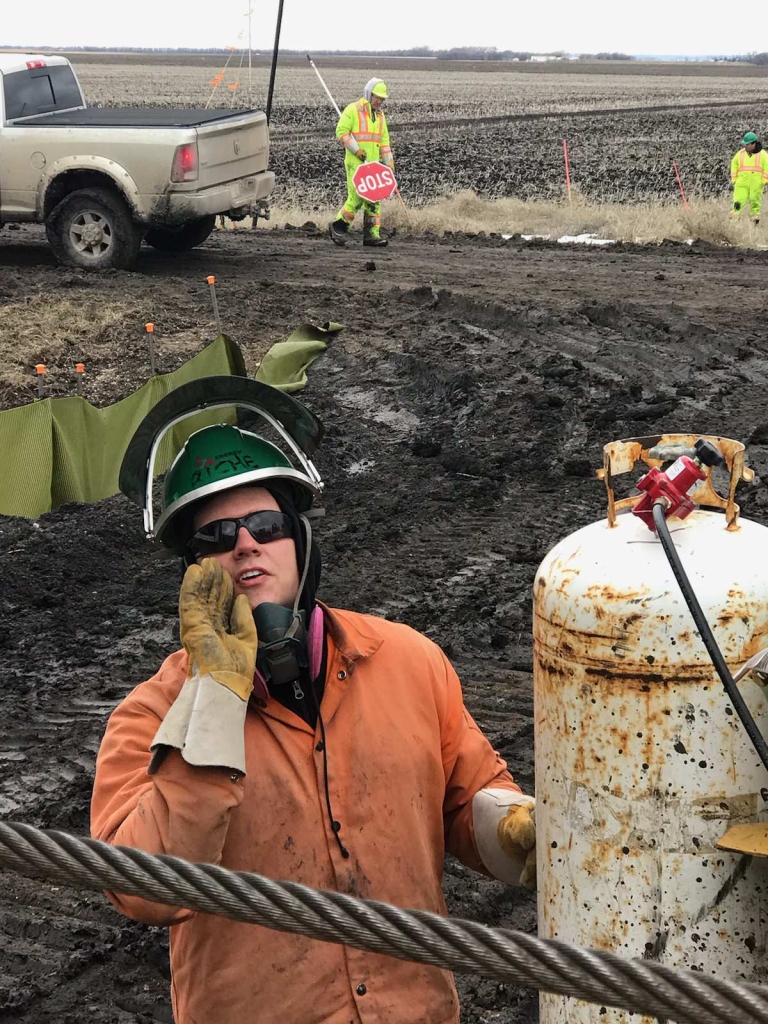
At twenty-two years old, I was working as a pipe-fitter on Manitoba hydro transformers with a small crew. The transformers were located along the Nelson River—1,060 kilometers north of Winnipeg, in the middle of nowhere. We spent weeks on end living in tiny 100-square-foot rooms, working 14 to 16 hours a day. Conditions were harsh, whether enduring blistering northern Manitoba heat while being swarmed by horse flies or braving -50 degrees Celsius during winter months.
I chose the path of becoming a pipe-fitter solely for the money, and frankly, I had no other reasonable options. As a child and teenager, I was a terrible student. I had little respect for authority and couldn’t be bothered to sit at a desk all day learning subjects I deemed irrelevant. My insatiable curiosity made classroom confinement unbearable. I couldn’t sit still knowing I could be outside building tree forts or discovering something beyond the classroom windows. My mother always called me a “dreamer,” suggesting that if I spent less time dreaming and more time focusing on schoolwork, I’d be better off. Given my attitude toward formal education and my academic track record, my options after high school were limited.
I was an avid athlete in high school; without sports, I don’t believe I would have graduated. I excelled in football, which ignited a burning self-discipline for weight training and fueled my passion for personal growth. Seeing the accomplishments I achieved on and off the football field through relentless effort gave me the confidence that with enough discipline, my future achievements were unlimited—unlike the low expectations set in the classroom.
After barely scraping through grade twelve and graduation, I spent a year “soul searching.” The options I had for football scholarships closed immediately after universities received my high school transcript. I began working limiting jobs like landscaping and moving furniture. I remember receiving my first full 80-hour paycheck—$690—for two weeks of hard labor. Standing in my childhood home with my parents, I read the amount aloud, disheartened, and wondered how anyone could live on that. My father replied, “Welcome to the real world, son,” subliminally suggesting that I should have pursued an education.
Shortly after, my father took me to the bank for an appointment with his advisor. We went over the basics—income, expenses, debt, interest, mortgages, tax-free or deferred savings accounts, and strategies. I was blown away by the importance of these aspects in daily life. I couldn’t help but think, why was I only learning this now? On the drive home, my father told me something that resonated: “You want to create enough wealth that there’s a wall between you and the man. You want to be in the position to never have to do something you don’t want to do—that is freedom.”
Realizing the crucial role money plays in life, I began applying for other jobs that offered growth potential. After numerous interviews with no success, I decided to continue with my real talent—football. I ventured to Winnipeg, two hours east of Brandon, to try out for the Winnipeg Rifles, a junior football team, and was accepted.
Fast forward a few months, and I began excelling on the field, eventually being offered a tryout with the Winnipeg Blue Bombers, Winnipeg’s CFL team, at twenty years old. The tryout went well, but I was undersized and inexperienced. The GM advised me to continue playing with the Rifles and practicing with the Blue Bombers over the next two years, then reevaluate. My desire to become a professional football player captivated my attention; it was all I wanted to do.
Off the field, I wanted to represent myself positively in the Winnipeg community to increase my odds of playing in the CFL. I joined various charitable events and helped wherever I could with the junior football club. One day after practice, the club president asked if anyone would like to help build a new clubhouse and locker room. Eager to contribute, I volunteered.
During the construction week, I was like a whirlwind—knocking down walls, installing windows, and assembling lockers. I became so engrossed in the work that I often forgot to eat. Once the clubhouse was complete, the president took me aside and asked if I had any interest in a job in pipe-fitting. He mentioned it was the highest-paying trade and could get me in the door. Despite knowing nothing about it, I agreed.
With references from my football contacts, I got the job and began my apprenticeship as a level-one pipe-fitter. Remembering my father’s advice about the “wall between me and the man,” I saved as much of my income as possible, eventually purchasing my first house at twenty-two years old. I started to get comfortable, enjoying the fruits of my labor—buying nice toys, trucks, and other liabilities.
I became so accustomed to the lifestyle that when the time came to continue my football career, I turned it down. I couldn’t justify the pay and the risk of injury. Instead, I accepted a transfer to remote jobs with more demanding hours and higher pay. I sadly chose money over my passion.
Discovering a New Path
Fast forward two years, back to enduring harsh conditions in remote locations, and I realized I had reached the ceiling of my potential in pipe-fitting—both in wage and enjoyment. Every day felt dull, being a human tool in the production line. I was no longer fulfilled or satisfied with the direction I was heading. One lunch break, while scrolling through podcasts, I stumbled across an episode titled “Retired Family of Three, Living on $25k–$27k per Year,” featuring Mr. Money Mustache (Pete). Looking back, this was the pivotal moment that changed my life’s direction.
To summarize, the podcast featured Pete outlining his path to early financial independence. At the age of 30, he and his family were able to retire completely, living off income from their investments. He emphasized frugality and living within one’s means. Intrigued, I spent that evening reading his blog, starting from the very first post.
Inspired by Pete’s insights, I began tracking every dollar leaving my bank account, finding ways to lower every expense. I sold my beloved lifted truck and bought a used Toyota RAV4, paid for in full. I started biking everywhere, halted eating out, and switched to buying food in bulk. I canceled subscriptions and minimized utility costs. My girlfriend at the time (now my wife) found some of these changes extreme, but they were necessary steps toward my goal.
Over months of practicing extreme frugality, I saved around 85% of my income, investing in Vanguard’s S&P 500 ETF index. Life was good, and I had a solid plan to retire by thirty-two. Then, a blog post by Pete discussing his recent real estate investment caught my attention.
He explained how he was making a great return on a rental property he paid for in cash. A commenter suggested he was missing out on the benefits of leveraging debt in real estate. This led me down the rabbit hole of real estate investing, joining communities like BiggerPockets, and consuming books like “Rich Dad Poor Dad” by Robert Kiyosaki. Realizing my primary residence was a liability, I sold it to free up equity. I purchased two duplexes, moving into one and renting out the others. My housing costs were eliminated, and rental income nearly covered my expenses. I was close to achieving lean financial independence.
Venturing into Real Estate Investing
In October 2018, work slowed down, and I decided to pursue real estate investing full-time. Living frugally with a safety net of savings, I explored wholesaling, marketing strategies, and networking. One significant connection was with a man named Brock Rogerson, who was interested in selling his Winnipeg properties. After discussions and a visit to Saint John, New Brunswick—a city with promising real estate opportunities—we decided to partner. We formed “R2 Capital Partners Inc.,” combining our skills—his experience and capital-raising ability, and my marketing and management.
Despite initial risks and uncertainties, our partnership flourished. Over four years, without drawing a salary, we scaled our portfolio, ventured into short-term rentals, office buildings, grocery anchored shopping centers and malls.
Current Endeavors and Achievements
Timeline:
2014: Started career as a pipe-fitter in the oil and gas industry.
2014–2018: Lived extremely frugally, achieving an 80%+ savings rate, resulting in $150,000 in savings used as a springboard into real estate.
2017: Purchased first rental property, a duplex in Winnipeg, expanding to five doors by year-end.
2018: Quit trade to pursue real estate investing full-time, achieving lean financial independence.
2019: R2 Capital Partners Inc. was formed. Focused entirely on acquiring value-add multi-family apartment buildings ranging from 3-25 units from Moose Jaw, SK to Saint John, NB.
2020: Sure Home Stays & COVID. This was a challenging year as we had to pivot our business model ——————–
Since then, I’ve invested in nearly all real estate asset classes—single-family homes, multi-family units, retail centers, office buildings, short-term rentals, and industrial spaces. My real estate investment firm has executed over $705 million in transaction value, with $65 million assets under management across 13 cities in Canada and the United States. We’ve also established auxiliary businesses that complement our investment ventures, such as a short-term rental property management firm.
Passions and Future Goals
I am passionate about technology, machine learning, and robotics, with a keen interest in innovation and transformative opportunities. I remain committed to building meaningful relationships, maintaining a strong emphasis on health, and pursuing ventures that blend impact with innovation.
Conclusion
My journey from a day laborer to an entrepreneur underscores the power of determination, frugality, and the relentless pursuit of financial independence. By challenging traditional paths, embracing opportunities, and taking calculated risks, I’ve built a life aligned with my values and passions. My grandfather’s wisdom about building “a wall between you and the man” continues to guide me, inspiring me to live freely and help others on their own paths to financial freedom.